Participants' Voices
Next Stage
Double Degree
Korea University to Kobe University
GSIS
Ms. Gidam Kim
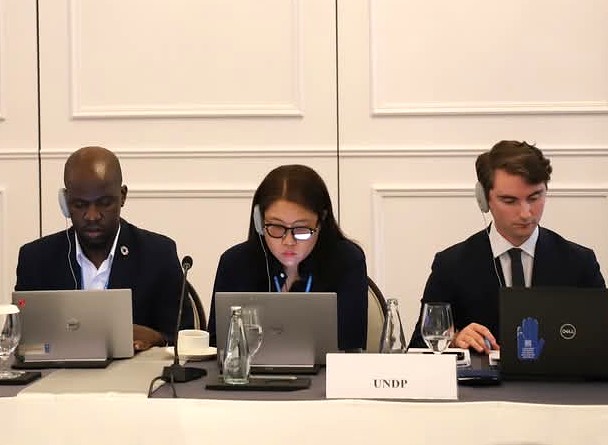
Profile: In 2019, she studied for one year at the Graduate School of International Cooperation Studies (GSICS), Kobe University, through the Double Degree Program while enrolled at the Graduate School of International Studies, Korea University. Since 2024, she has been working as a Monitoring, Evaluation and Learning Specialist at the UNDP Lao PDR Country Office.
Q1: What do you do in your current role?
I am currently working with UNDP in Lao PDR, supporting projects in the Unexploded Ordnance (UXO) sector. My work focuses on monitoring and evaluation, donor reporting, and coordination with government counterparts and implementing partners. I support the translation of programme commitments and donor requirements into concrete, timely, and compliant outputs, while also strengthening monitoring frameworks and internal coordination processes.
Q2: What has been the most memorable experience in your current work?
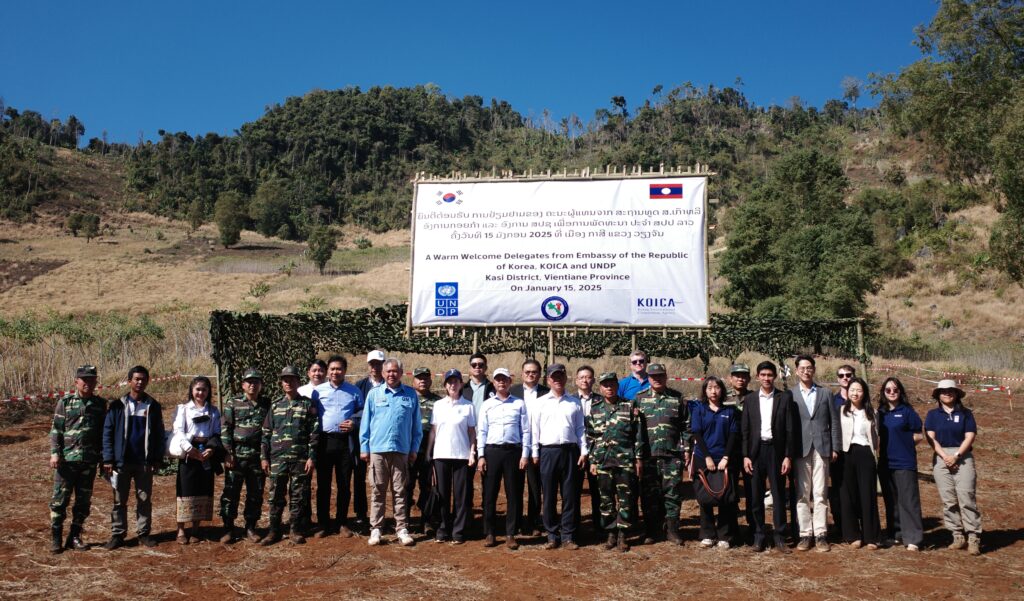
One of the most memorable experiences has been participating in field missions to UXO-contaminated areas, where survey and clearance operations are ongoing.
Seeing clearance activities firsthand reinforced the importance of linking field realities with monitoring and reporting. It also strengthened my understanding of how evidence-based monitoring supports operational decision-making and contributes to safer communities in a high-risk sector like UXO.
Q3: Why you wanted to pursue this career?
I was interested in a career where I could connect policy discussions with what actually happens on the ground. Over time, I realized that I was most motivated when my work was linked to real field contexts and could support practical decision-making, rather than remaining at a purely conceptual level.
Q4: What has been your most memorable experience in the CAMPUS Asia Program?
What I found especially valuable was the zemi itself. Having a space where students openly shared ideas, gave constructive feedback, and helped each other fill in gaps made a big difference in how I learned. Rather than focusing on getting the “right” answer, we were encouraged to think together and move toward better approaches as a group.
I also appreciated the CAMPUS Asia network beyond the classroom. Being able to meet seniors and juniors through the programme while working in places like Uganda and Lao PDR made the experience feel more continuous and supportive, even after graduation.
Q5: How learning from the CAMPUS Asia Program has benefited your current work?
The programme helped me develop a way of thinking that connects theory with practice. In my current work in the UXO sector, monitoring is not only about numbers and reports, but about understanding what is happening in the field and reflecting that reality accurately. The academic foundation I built through CAMPUS Asia has helped me approach this work more thoughtfully and critically.
Please share a brief message for current students and juniors.
You do not need to have everything figured out early on. Try to gain experiences that allow you to learn how things work in practice, even if they seem small at the time. Field exposure, curiosity, and a willingness to keep learning will matter more than having a perfectly planned path.