Participants' Voices
Dispatch
Field Trip
Kobe University to Field Trip
November 2025
Microsoft AI Co-Innovation Lab Kobe
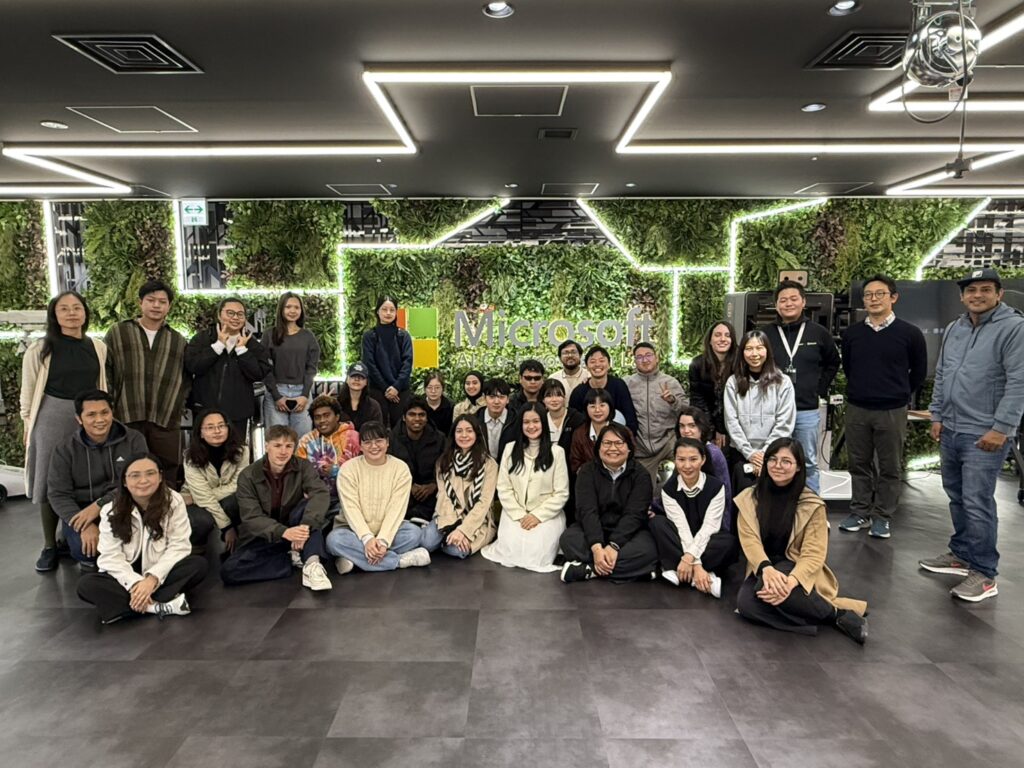
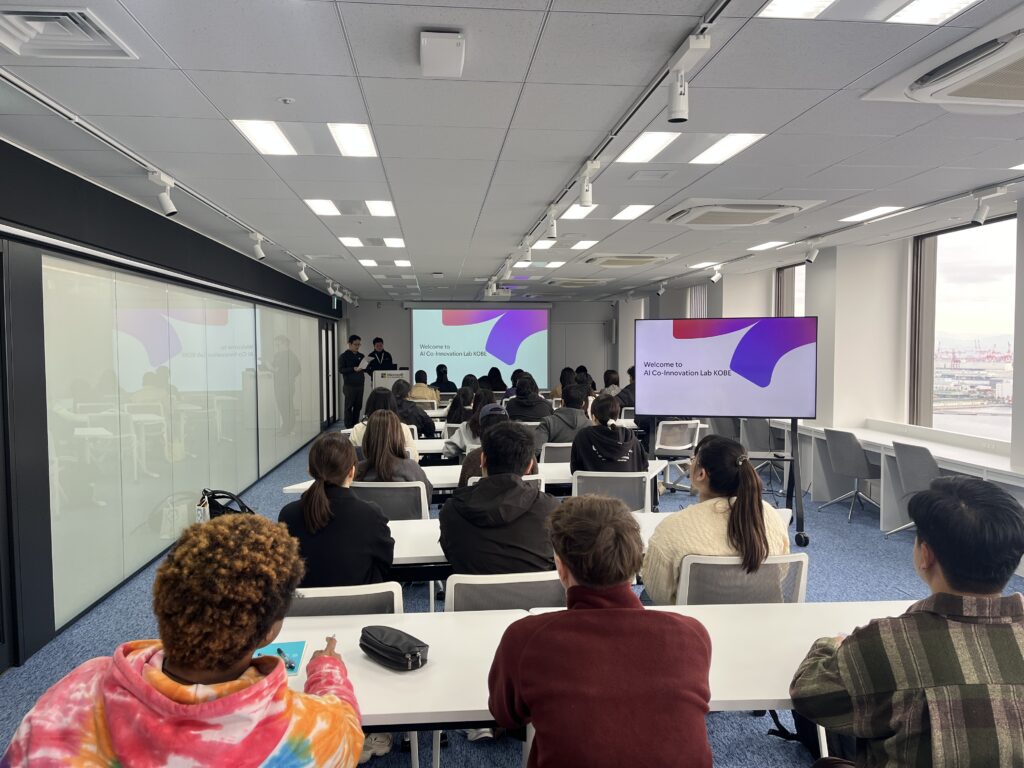
In the CAMPUS Asia Plus Program, students are offered opportunities to deepen their practical learning through collaboration with international organizations and seminars led by practitioners. In the fall semester of 2025, as part of the course Risk Management II at the Graduate School of International Cooperation Studies (GSICS),, students visited the Microsoft AI Co-Innovation Lab Kobe* and participated in a field trip on the theme of “Social implications of artificial intelligence and innovation for future risk management.” Below are comments from the participants.
*Microsoft AI Co-Innovation Lab Kobe, established in 2023, supports companies in developing AI and IoT solutions. Microsoft experts collaborate with businesses to tackle challenges and create new opportunities, and the lab also showcases these joint projects.
Adinda Saraswati Cahyanung Wulan Suci(Indonesia)
Overall, the visit helped me understand that managing AI risk requires constant effort and a lot of work behind-the-scenes. I was surprised by how many layers of protection are needed just to ensure one model answer is safe. It made me appreciate the scale of responsibility that comes with building AI systems. Personally, it made me more aware of how important it is for future professionals (including us students) to think critically about the risks of digital technology.
Anjum Mobasshir(Bangladesh)
The visit, guided by Mr.Takami-San’ thoughtful presentation, helped me understand how risk concepts from class appear in the real AI development. Seeing the beautiful meeting spaces, the prototype medical robots, and the workflow behind AI development made the experience more concrete. I found it meaningful to see how prevention, monitoring, and accountability are applied in practice. I was also surprised by how many layers of safety are needed to manage AI responsibly. The experience made me think about how countries like Bangladesh can benefit from similar structures as they begin adopting more advanced AI systems. Overall, the visit strengthened my understanding of responsible innovation and the importance of strong risk governance.
Stipanic Tonka(Montenegro)
As a huge AI sceptic, my experience at the Kobe AI Co-Innovation Lab was surprisingly quite a positive one. I saw examples where AI can become a replacement for difficult & mundane tasks so that we can use our human capabilities for more fulfilling roles within society. I remain skeptical of AI, but not because of AI itself, but because of its users. However, I am very thankful to be able to see the positive sides and the ways developers try to deal with user-abuse, and I hope I will continue to see more of it in the future.
Shin Jisu (South Korea)
This experience taught me a more effective way to use the technology, not just for handling data, but also detailed explanation of ‘prompts’ is provided in the presentation. While I had always heard about data risks, this visit made me even more curious about how to mitigate and resolve them. Furthermore, it was fascinating to hear about data consulting directly during the Q&A session. I will certainly pay more attention to data ethic in future research topics or projects.
Chang Tzuyin(Taiwan)
The visit helped me connect risk management theory to the real processes behind AI systems. I better understood how risk shifts from “uncertainty” to “something actionable” only after layers of infrastructure, policy, and engineering are put in place. More importantly, the visit pushed me to think about the politics of this transformation. I realized that responsible AI is not just about preventing harm— it is about deciding which harms matter, whose risks are prioritized, and how uncertainty is framed. What I found most meaningful was the contrast between the technical clarity inside the lab and the messy social context AI must eventually face. The visit deepened my appreciation for how difficult true AI governance is, and why conversations about risk must include both engineering solutions and broader societal perspectives.