Participants' Voices
Dispatch
Field Trip
Kobe University to Field Trip
October 2025
WHO Kobe Centre
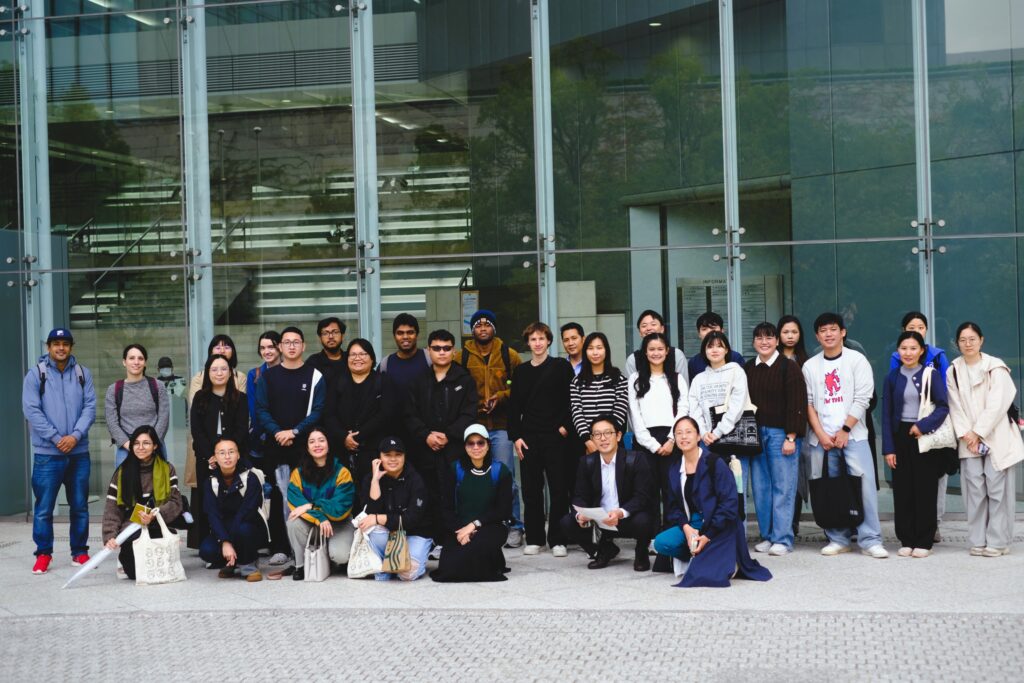
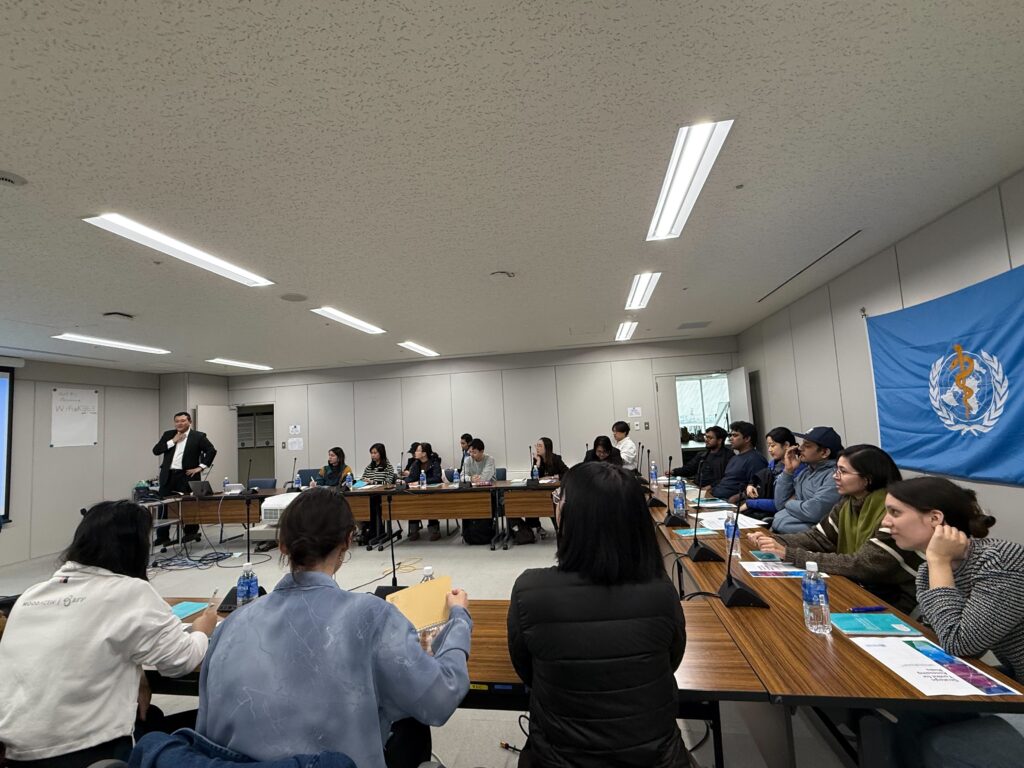
In the CAMPUS Asia Plus Program, students are offered opportunities to deepen their practical learning through collaboration with international organizations and seminars led by practitioners. In the fall semester of 2025, as part of the course Risk Management II at the Graduate School of International Cooperation Studies (GSICS), students visited the WHO Kobe Centre* and participated in a field trip on the theme of “Global Health Threats and Risk Management.” Below are comments from the participants.
*The WHO Centre for Health Development (WHO Kobe Centre) is the only WHO directly managed research office established in Japan. It was founded in 1995 in the after math of the Great Hanshin-Awaji Earthquake. The Centre has published guidance on research methodologies, conducted joint research with universities and other institutions, and built research networks. Marking 30 years since the earthquake, the Centre is scheduled to close at the end of March 2026.
Vu Thanh Thuy (Vietnam)
The visit to the WHO Kobe Center broadened my understanding of risk as both a scientific and a governance concept.
I was especially impressed by how the WHO Kobe Centre treats risk management not merely as a ‘disaster response’ but as a continuous, evidence-driven process. The visit also encouraged me to reflect more deeply on global challenges, particularly those related to global governance in the health and medical sector, health governance, climate change, and disaster preparedness. It made me realize that addressing global risks requires not only technical knowledge but also shared responsibility, trust, and international collaboration.
I am sincerely grateful to Kayano-sensei and the WHO Kobe Center team for their time, guidance, and passion. Their dedication to improving global health and resilience has been truly inspiring and has motivated me to contribute to strengthening global health resilience in my future academic and professional work.
Adinda Saraswati Cahyaning Wulan Suci(Indonesia)
This visit significantly changed how I understand risk in public health. Before, I thought risk management was mainly about controlling infectious diseases and reacting to emergencies. However, I learned that the essence is reducing social vulnerabilities and building long-term resilience.
What particularly impressed me was how much the WHO depends on partnerships.
No single organization can manage global risks alone. This experience deepened my understanding of the importance of collaboration across countries. It also made me realize that risk management is not just about avoiding harm, but about creating stronger, more adaptable, and trust-based societies.
Franka Rozemarie Berkhout (the Netherlands)
The most impressive experience was learning how much the WHO has achieved over the last decades, and how important global health security is. I strongly realized the significance of having a foundation that connects countries to reassure disaster risk management for the health of the planet, humanity, and future generations.
Listening to Ryoma Kayano Sensei has inspired me to look at what countries can learn from each other in terms of risk management. In particular, because the WHO Kobe Centre focuses on policy research, this has also inspired me to consider a new career path working for the WHO in the future as a policy advisor, utilizing my expertise in environmental science related to climate change. Overall, the visit has given me great inspiration and new motivation, making it a valuable experience for my future career aspirations.
Chang Tzuyin(Taiwan)
The visit really changed the way I think about “risk.” Before, I thought of it mostly as numbers and probabilities, but now I see it as a human concept deeply connected to inequality, capacity, and trust.
I was surprised by how much the WHO focuses on mental health, ageing, and non-communicable diseases (NCDs), not just infectious diseases. It reminded me that “health security” is much broader than emergency response; it’s about strengthening everyday systems that quietly protect people long before a crisis hits.
Personally, this visit made me realize that governance and resilience go hand in hand. Academically, it connected many theories from our class to real international challenges. Behind every policy or framework are real people trying to make the world safer.
Park Chansong(South Korea)
The visit reframed my understanding of risk—from something to avoid into something to anticipate, adjust, and share responsibly. I came to see that risk is not merely a number or probability; it reflects people’s choices, capacities, and hopes. Witnessing how scientific rigor and human intuition coexist at the Centre reminded me that resilience grows from connection, trust, and collaboration. This experience also helped me connect the theories of global governance, development policy, and disaster management learned in the GSICS course to actual international institutions.
Through this visit, I realized that studying global health is not just about systems but about the people those systems serve.
This visit not only deepened my academic understanding of risk and governance but also reshaped my personal sense of responsibility as a future policymaker seeking balance between technology and human well-being.
Pornpimol Chaiboonta (Thailand)
I was especially impressed by the Health Emergency and Disaster Risk Management (Health EDRM) framework. I realized that effective disaster-risk reduction depends not only on emergency response systems but also on strengthening local health capacities and community resilience—an approach that closely aligns with my nursing leadership and risk-management responsibilities in Thailand.
Overall, the visit encouraged me to think more critically about how evidence-based policies and collaborative networks such as those coordinated by the WHO Centre in Kobe can be applied to strengthen national preparedness and the role of the nursing profession in future crises.